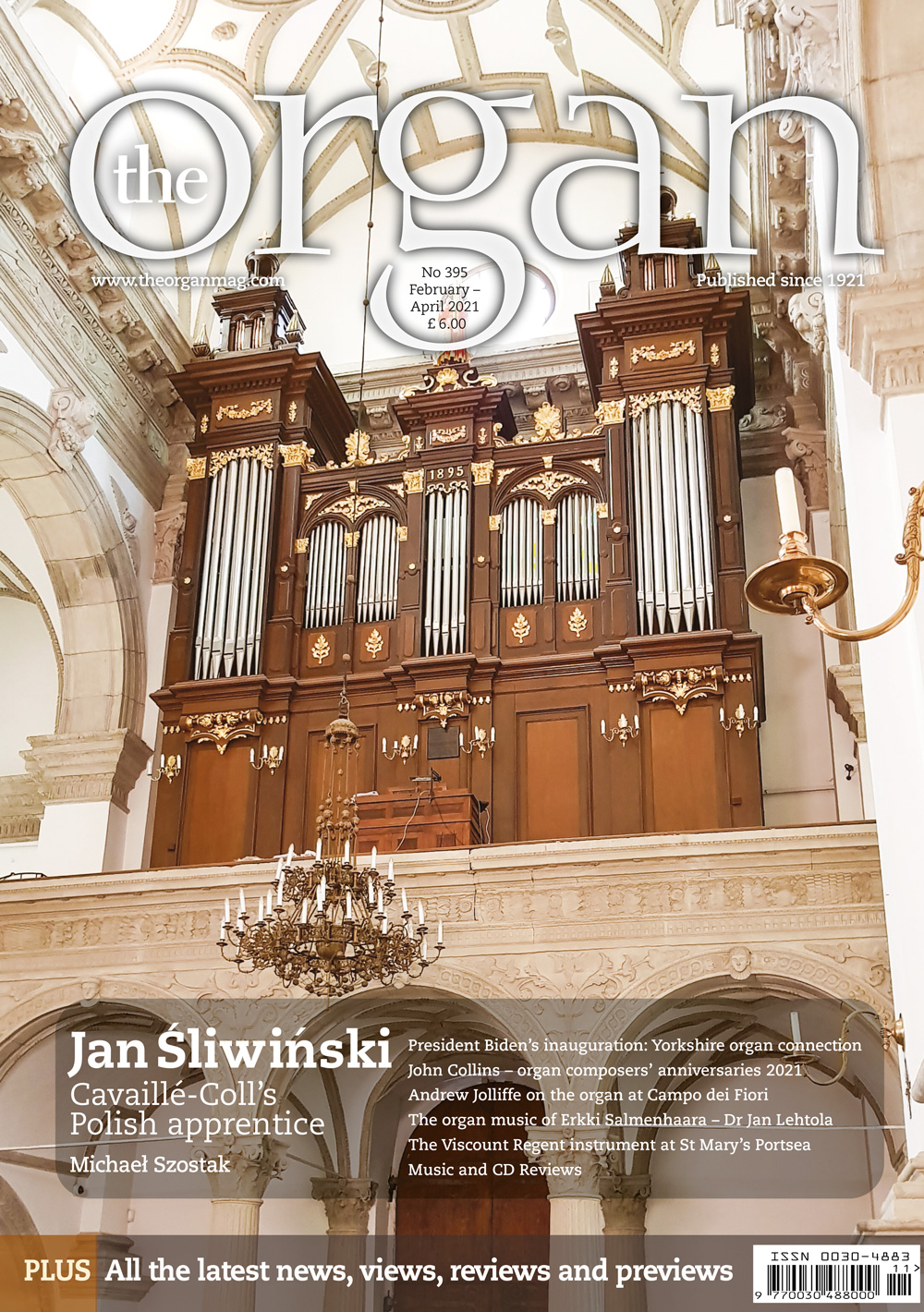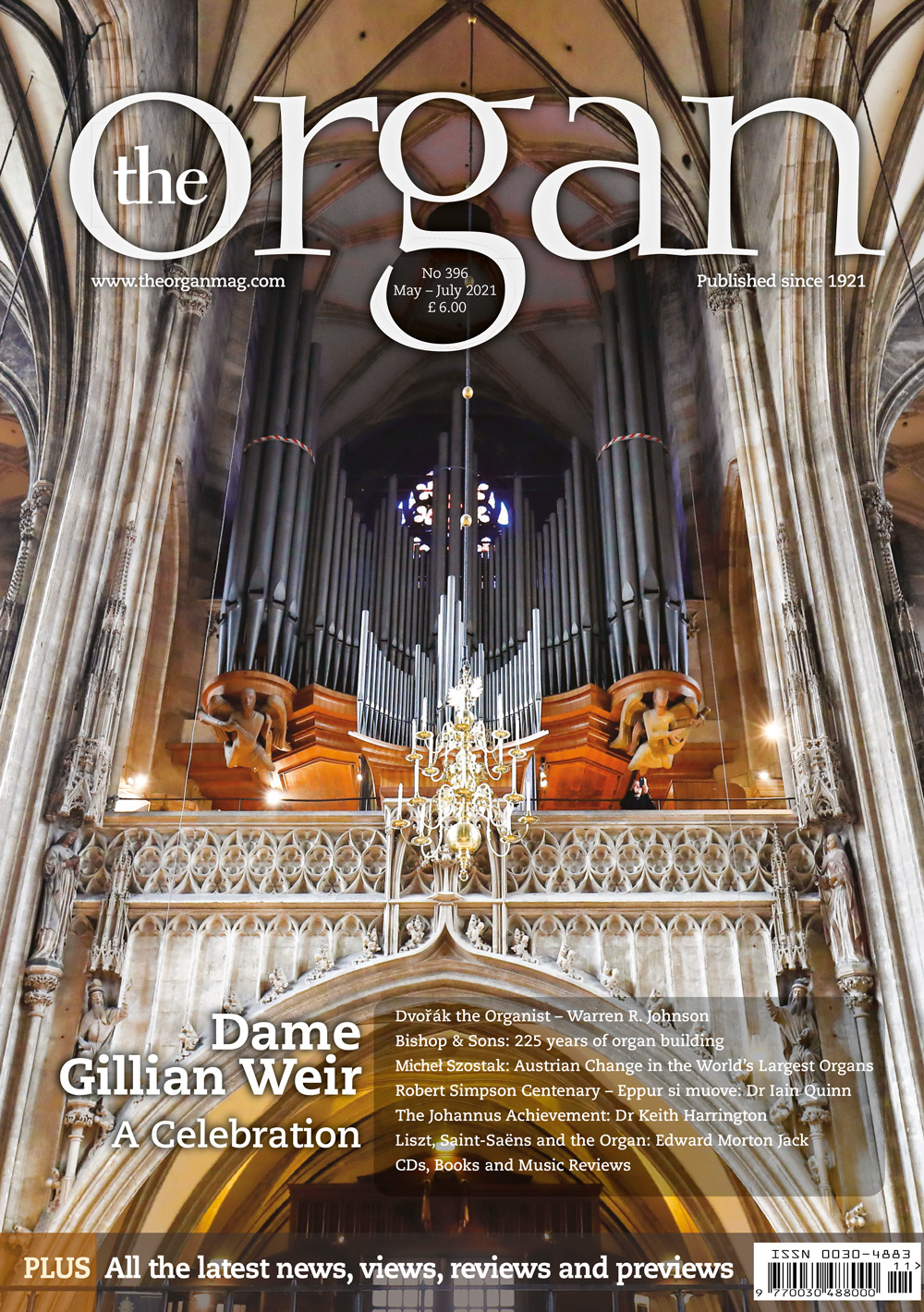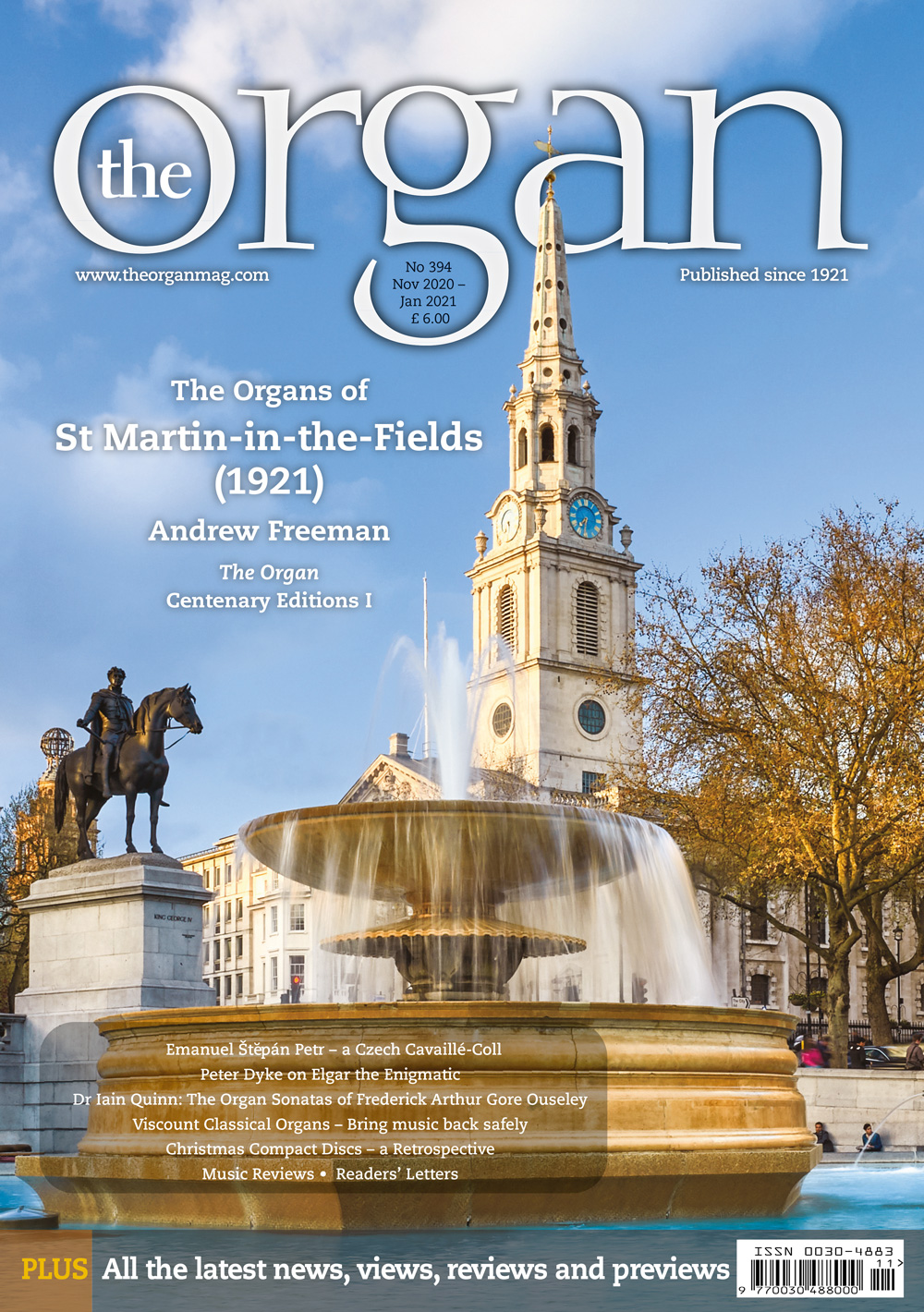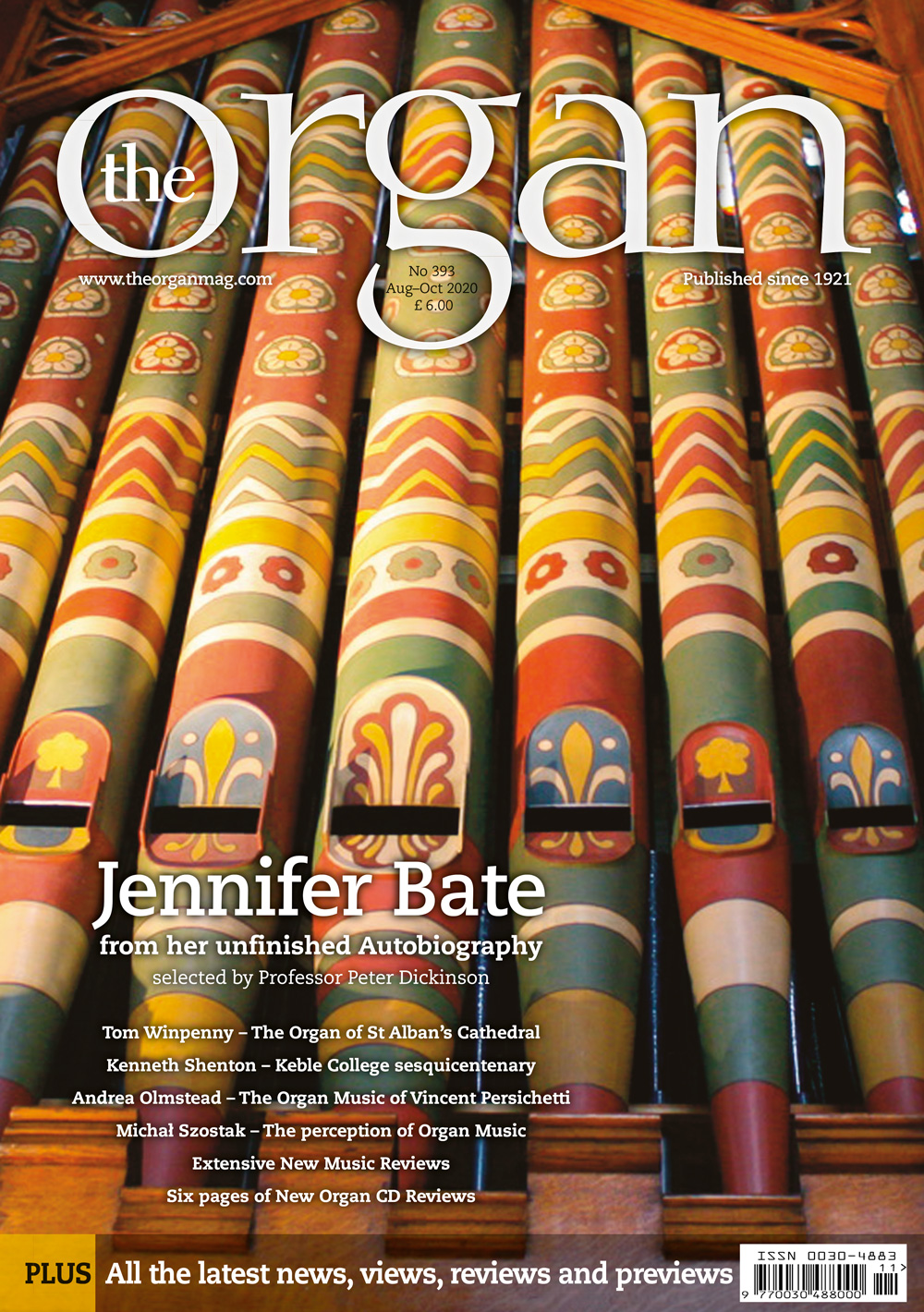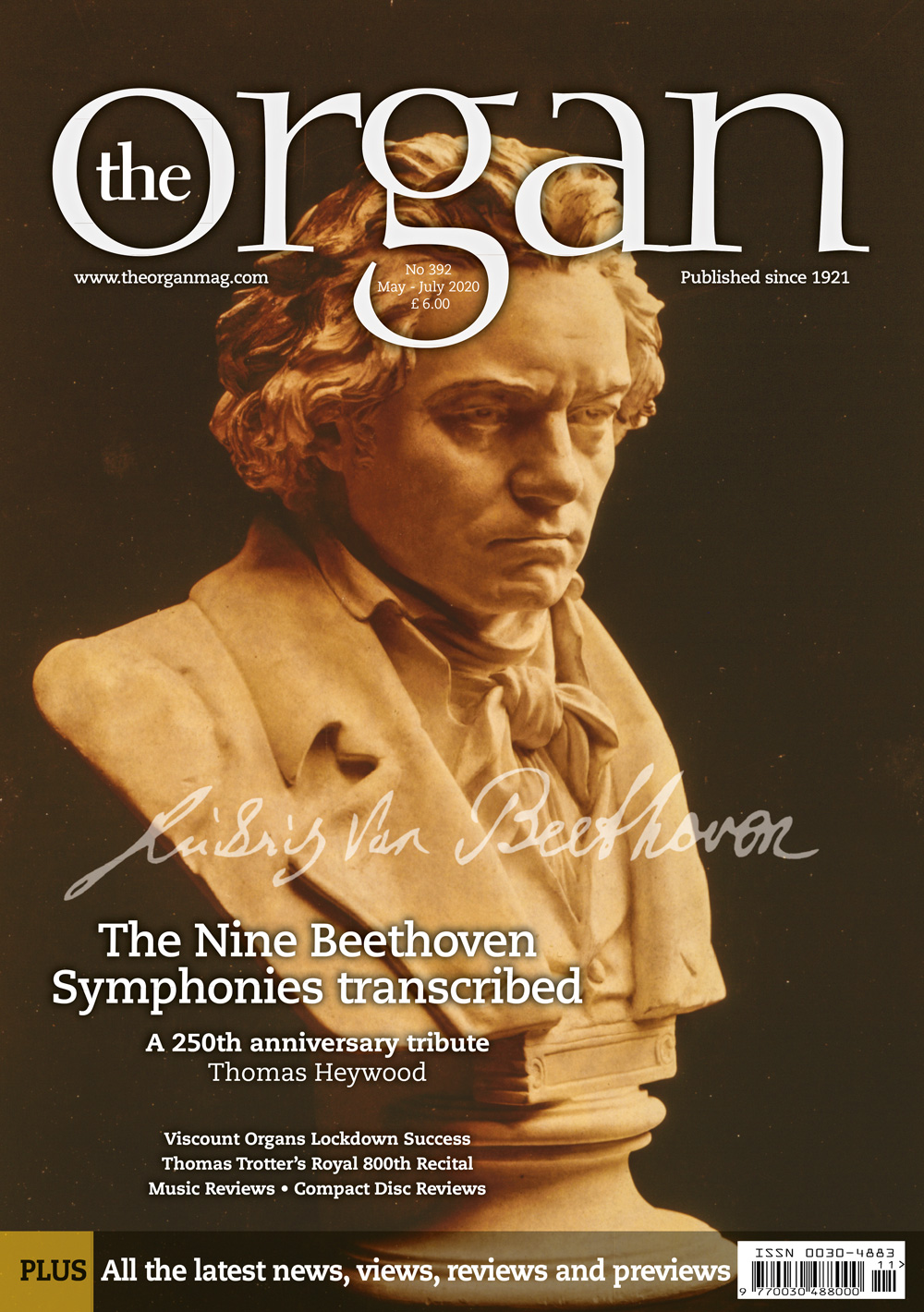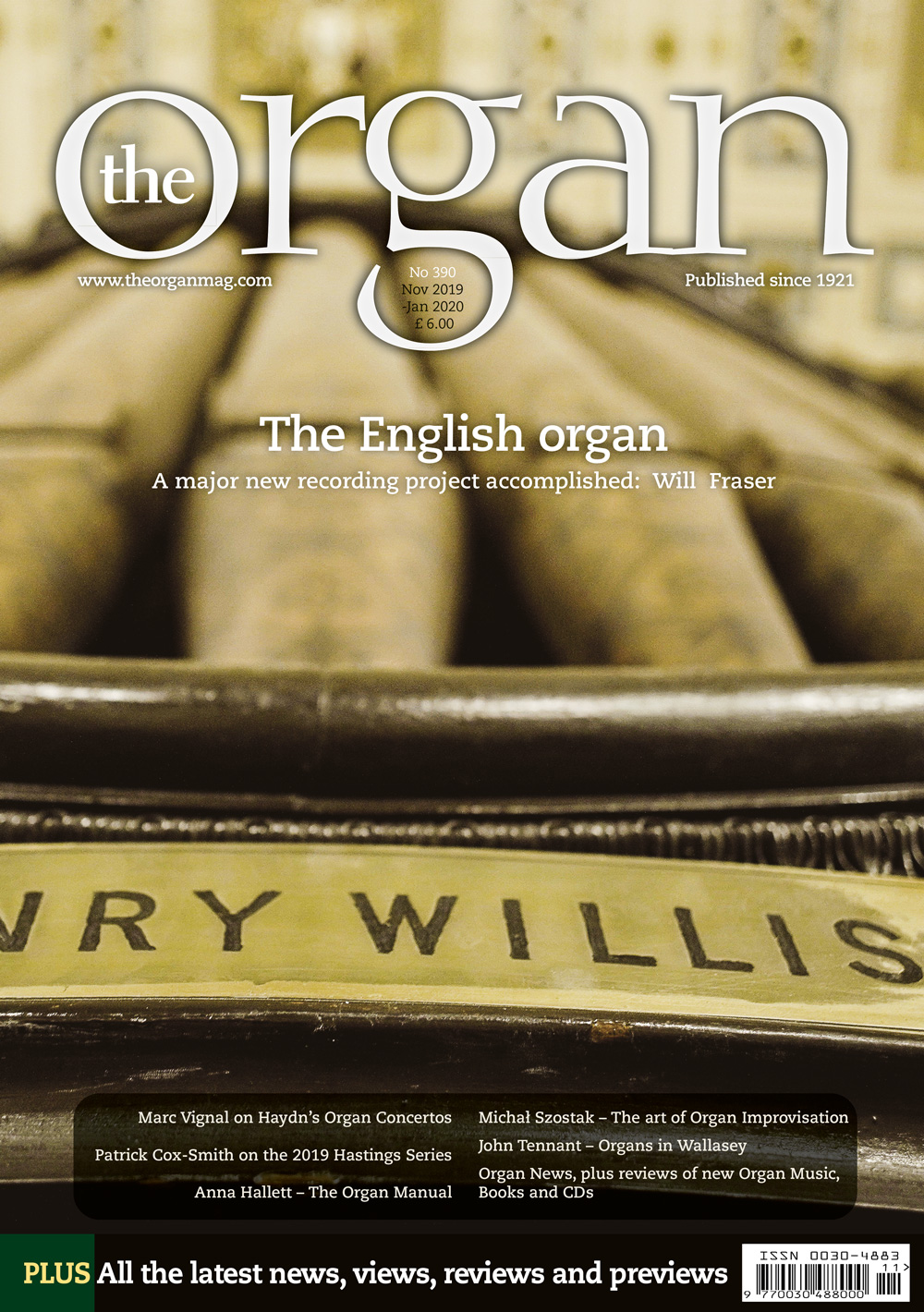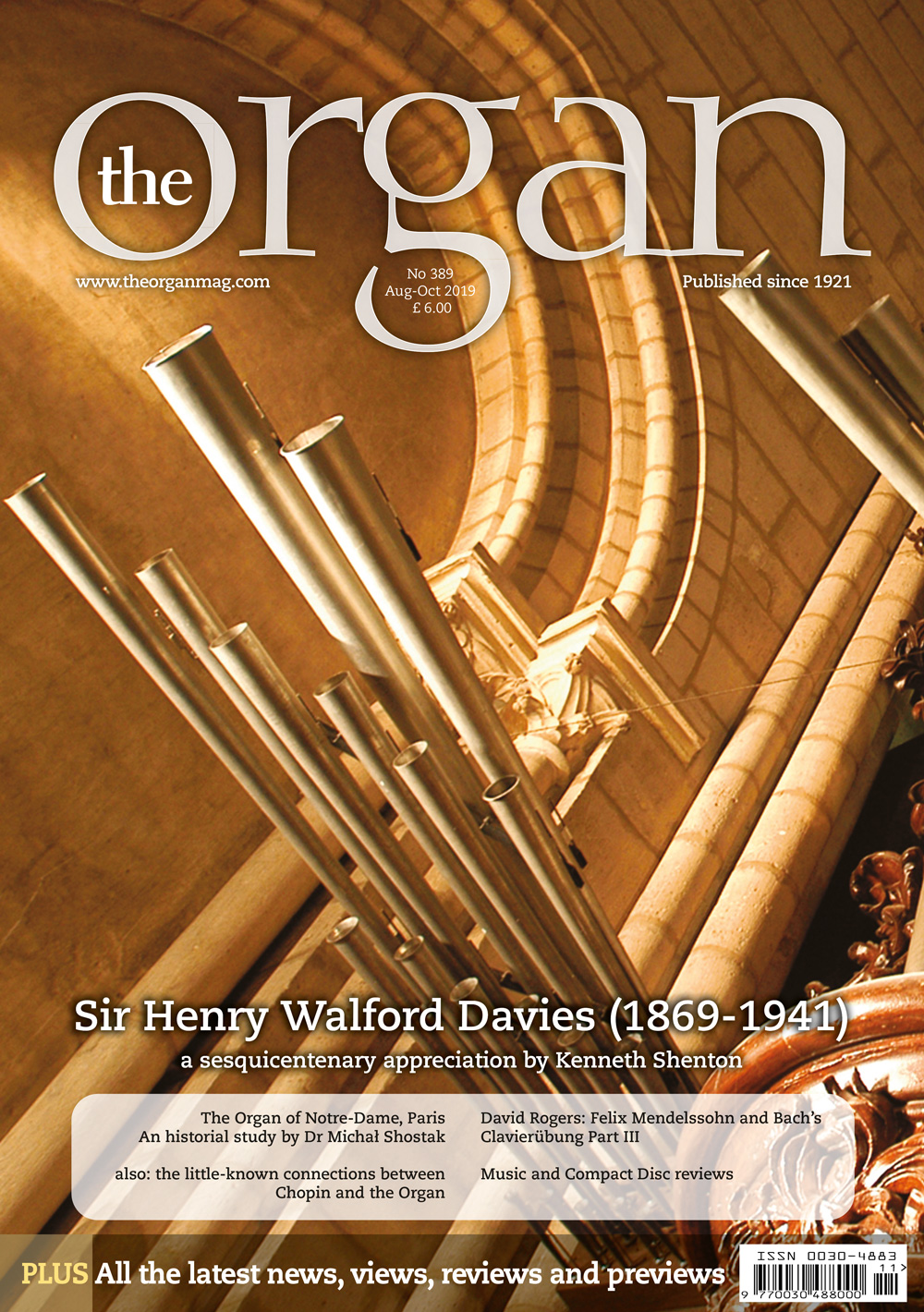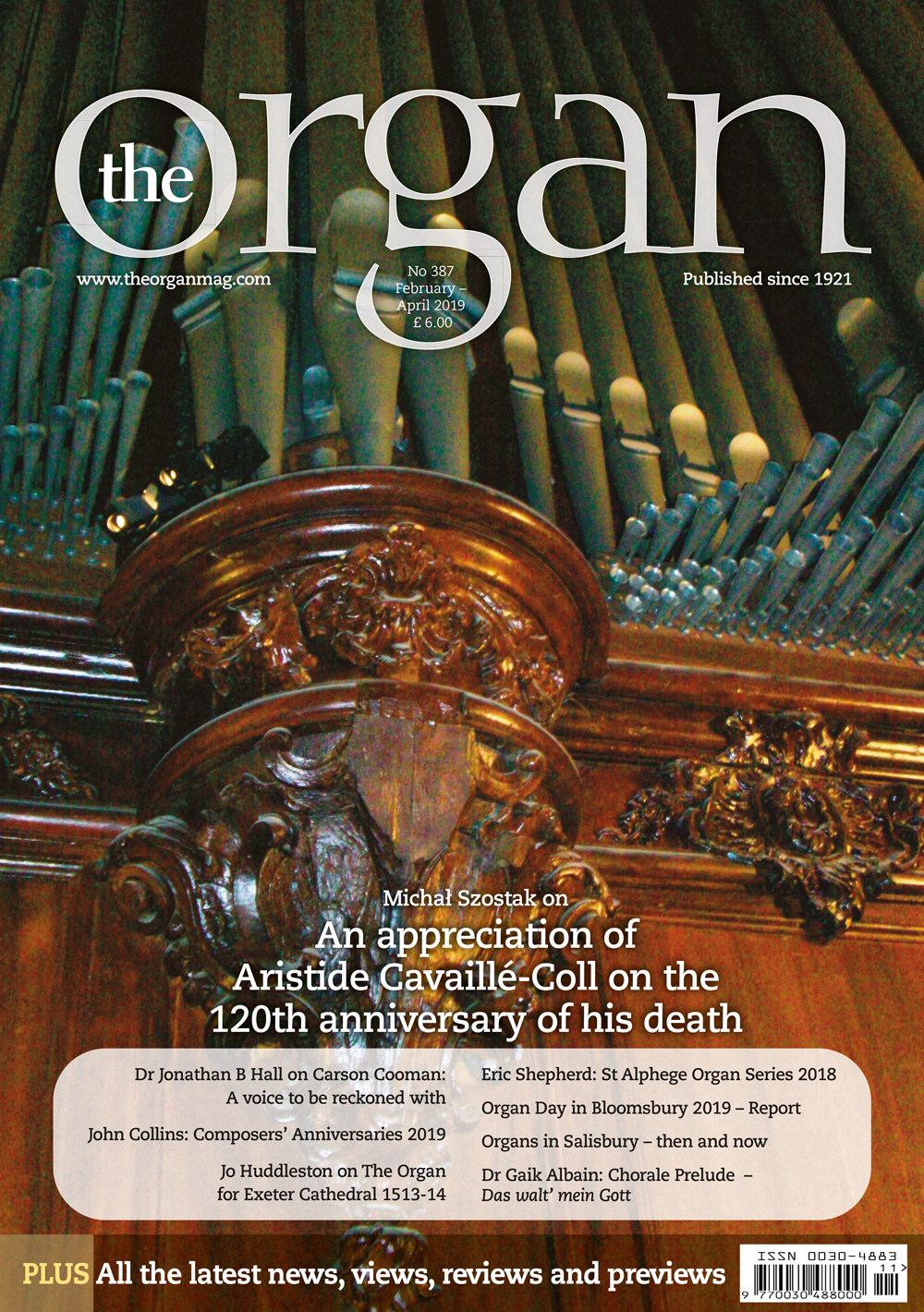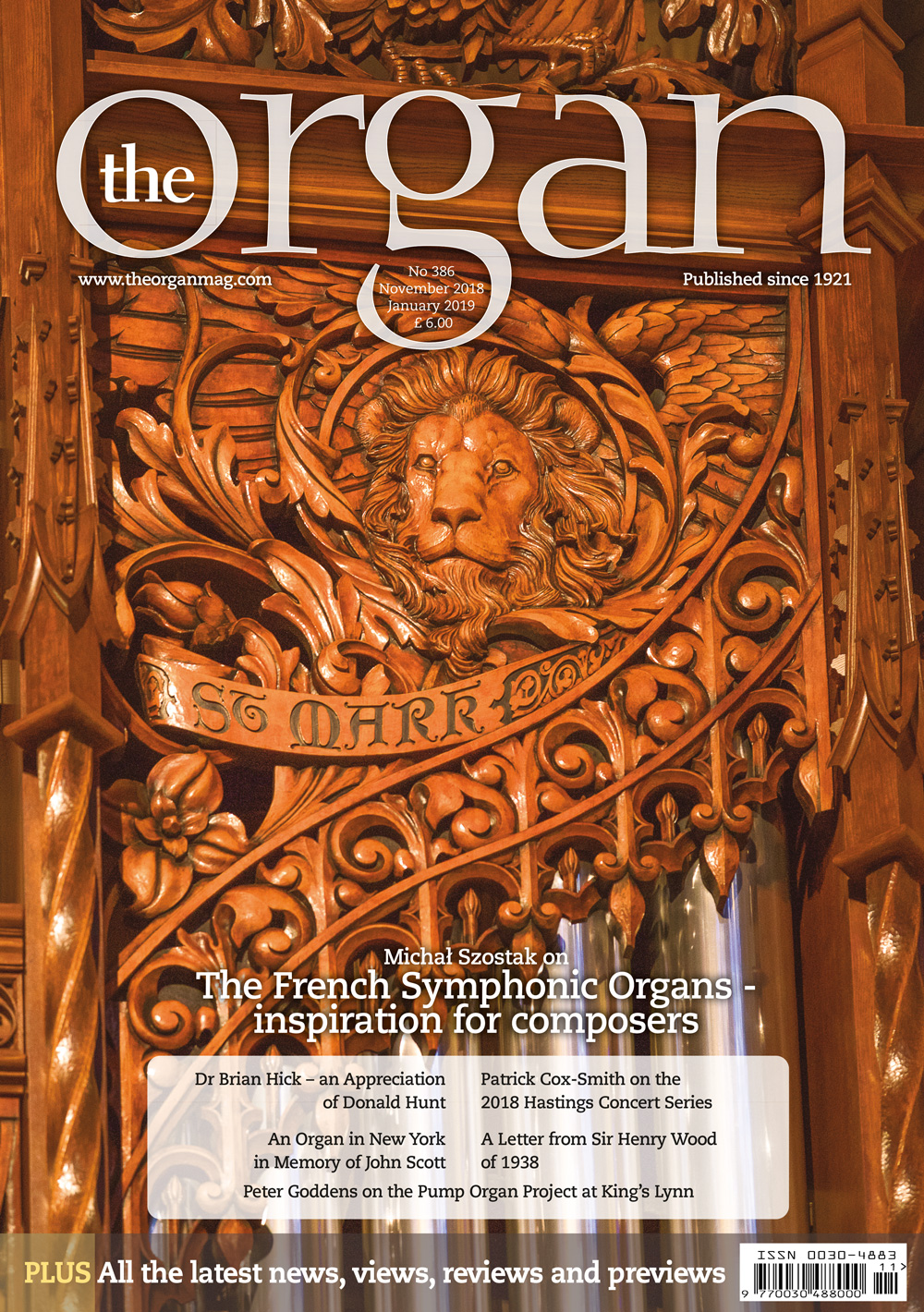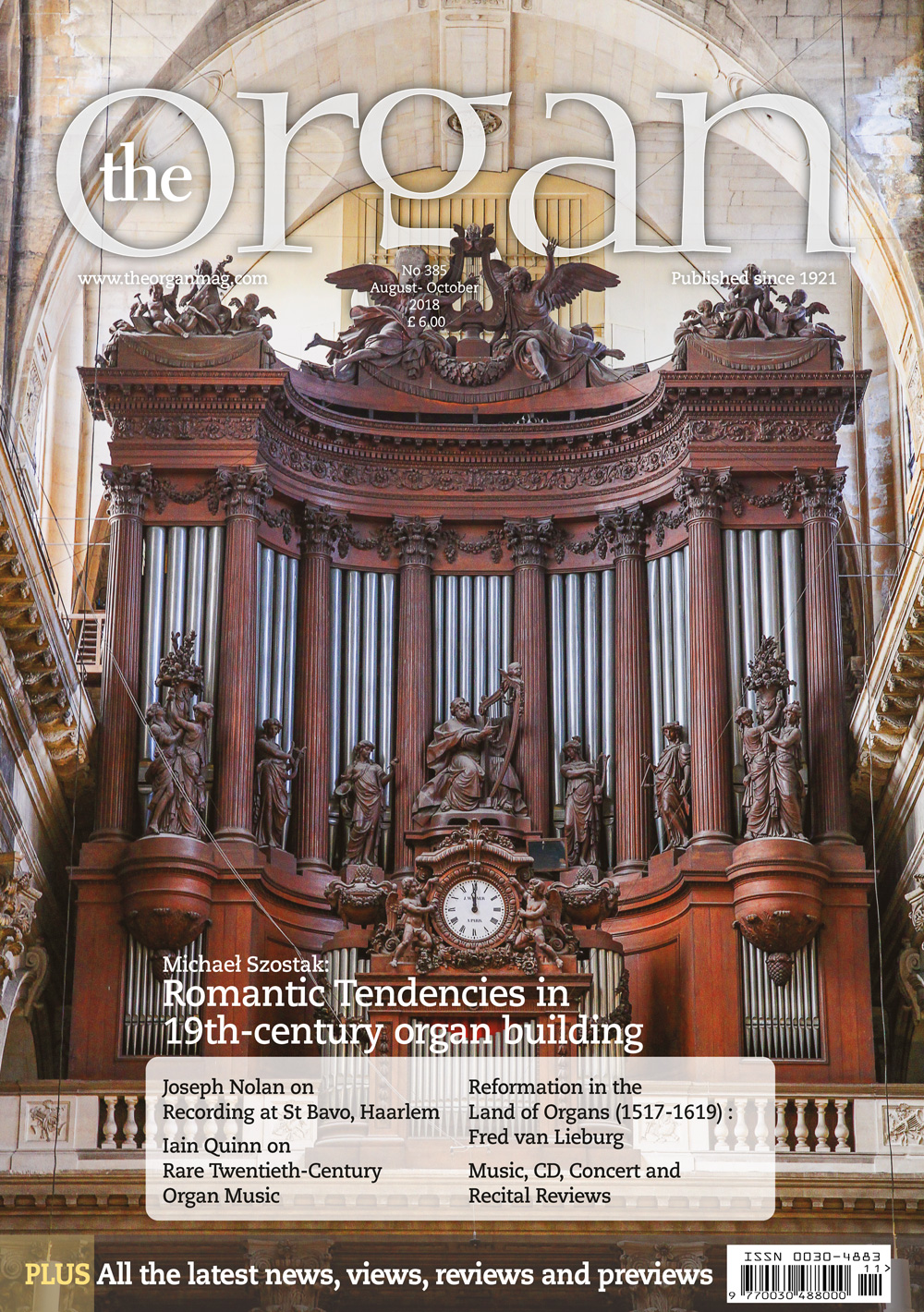
Current Issue
|
May 2013 - July 2013 (Number 364) Issue 364 includes features on:
For previous editions of The Organ, see our index of back issues. |
|
The Cavaillé-Coll Organ of Notre Dame de Paris
The great organ finds its voice once more.Patricia StoughtonAfter six months of restoration work, the great organ of Notre-Dame de Paris found its voice once more at the opening ceremony of the 850th anniversary celebrations of the cathedral on December 12, 2012. A Pontifical Mass was conducted by Cardinal André Vingt-Trois of Paris in the presence of the Minister of the Interior, Manuel Valls, and the Mayor of Paris, Bernard Delanoë. And once again the sound of this magnificent organ filled the cathedral. In addition, as part of the 850th anniversary celebrations, the organ will be at the heart of Le jour Mondial de l’Orgue - World Organ Day - on May 6, “a world-wide musical marathon”, organized by Notre-Dame cathedral involving the performance of more than 850 concerts. Organists from all five continents will play works spanning nearly nine centuries from some of the famous Notre- Dame composers, including Gervais- François and Armand-Louis Couperin, Claude Bénigne Balbastre, Louis Vierne, Marcel Dupré, Maurice Duruflé and Pierre Cochereau. Many organists who have played there over the years have been invited to join in by giving recitals in concert halls and churches of all denominations in their home countries but the event is open to all. Each concert will include at least one organ work originating from Notre-Dame but most many more. The event is linked to the French Jour de l’Orgue - Day of the Organ - taking place from May 4 - 6, to promote the organ with recitals, visits to organ builders, demonstrations of how an organ works and educational films. There are said to have been small organs in Notre-Dame from when it was built in the 12th century. However, Léonin, highly regarded composer and founder of the École Notre-Dame, and Pérotin le Grand, (1160 - 1220), who followed him, are believed to have only played on small instruments in the choir. The first great organ was built during the thirteenth century. There are no existing records of the first organists to have played the instrument but in 1330 the cathedral accounts mention the payment of fees to an organist. The first of the great organ’s organists to be mentioned by name is Jean de Bruges in 1334. He played a swallow organ suspended beneath an upper window in the nave, which was dismantled in 1425. However, by then it had already been superseded by a new organ built by Frédéric Schambantz on the stone gallery above the great west door. It had a keyboard with 46 keys, a pedal board and over six hundred pipes. The Schambantz organ remained in place for two centuries played by many organists including Henri de Saxe, who was resident organist from 1415 - 1436. Olivier Latry writes that de Saxe’s “nomination by competition gives us an idea of his job description.” It entailed playing for the twenty-three annual religious festivals, and for all services from Vespers to a Great Mass.
A pdf download of this excerpt is available to download: The Cavaillé-Coll Organ of Notre Dame de Paris excerpt. To see the whole article subscribe to The Organ.
|
|
Oxbridge Organs IX - Jesus College, OxfordCurtis Rogers
Dating from 1571 by petition of Hugh Price, a Welshman, to Elizabeth I, Jesus College was founded with the particular intention that it should educate scholars from the Principality, a tradition which continued formally until well into the 19th century. Problems in receiving bequests of money from Price meant that the College did not have any significant buildings for some time and a chapel was provided only in the 1620s. With the intervening Civil War and Commonwealth there does not seem to have been any provision for music in the chapel but at certain times subsequently there is evidence that organs were used there. One was apparently borrowed in 1686 for the funeral of the College’s Principal, Sir Leoline Jenkins. By 1769 the College had an organ by Byfield & Green, and then at some unspecified point after that a Bevington. The latter instrument was replaced in 1899 with one by J.J. Binns for which the specification was designed by John Varley- Roberts, who was then Informator Choristarum of Magdalen College. The National Pipe Organ Register gives the specification as consisting of 16 stops on three divisions, with a heavy concentration of 8´ stops on the Swell. It seems that there were a couple of modifications to the voicing by Gray & Davison in 1934, namely the substitution of a 1¾´ Larigot for an 8´ Dolce on the Great, and a 2´ Flageolet for the 8´ Vox Angelica to create a more varied chorus on the Swell. The Binns organ was replaced in 1993 with an entirely new instrument by William Drake, the old one having been removed to the church of St. Michael and All Angels in New Marston, a suburb of Oxford. As is typical of Drake, the organ is modelled on English types of the early 19th century. On the College’s website page for the organ, Drake explains that the ‘the sound of this organ reflects the move, which took place during this period, towards a broader and more mellow timbre coupled with greater dynamic range, which did not, however, obscure the colourful image of individual sounds which characterise older English instruments’. Two decades on, this remains a good description of the organ’s style today: it is a refined instrument that produces a uniformly pleasant sound, discernible even in the Trumpet for A pdf download of this excerpt is available to download: Oxbridge Organs IX - Jesus College, Oxford excerpt. To see the whole article with specification subscribe to The Organ.
|
|
Arranging Orchestral Music for the King of InstrumentsAn Applied Analysis of Arrangements by Beethoven, Lemare and Liszt (Part II)
Jens KorndoerferIII. Franz Liszt: Modifications to the Original Text in an ArrangementWhen Liszt made his piano arrangements of Beethoven’s symphonies, he not only attempted to include all of the ‘fine details of the orchestral score’, but sometimes he would go even further and add notes or ‘interpret’ the existing ones. I will analyze two examples from Beethoven V/2, in which Liszt altered the original text in his piano version. Then I will present how I used similar means in my organ version of the same piece and also offer an explanation as to why Liszt may have made these changes. In m. 78, the viola, violoncello and the double basses have the same repeated thirty-second notes throughout the entire measure; in mm. 81ff, Violins I and II as well as the violas play the same accompanimental figure in unison, the violas one octave lower (example no. 3).
A pdf download of this excerpt is available to download: Arranging Orchestral Music for the King of Instruments Part II excerpt. To see the whole article subscribe to The Organ.
|
|
Stations of the CrossThe composer Giles Swayne, in conversation with Brian Hick, explains the background to his major organ work, newly recorded by Resonus Classics
It may have been the second day of spring, but North London was bitterly cold when I went to meet composer Giles Swayne to talk about his organ composition Stations of the Cross. Thankfully tea, crumpets and cherry jam soon warmed me up as we sat in his kitchen and began to consider the background to this substantial work. Not that it had been easy to get in, as Giles demanded a password before allowing me across the threshold – though I was soon to realise that a quirky humour is an essential part of his art as a composer. Yet for all the latent humour within his scores, his approach to composition has always been serious and meticulous. The late Susan Bradshaw, a long-time friend and mentor, noted his ‘fascination with structural design’ and the ‘detailed planning’ that go into all of his diverse works. He admitted that both of these aspects affect the teaching he does two days each week at Clare College, Cambridge. ‘I tend to use humour as a tool to get the best from my students. After all they are all very bright and respond better to off-hand remarks rather than to direct and possibly edgy criticism.’ I had first encountered Giles Swayne as a composer in 1980 with the performance of Cry - an epic ‘hymn to Creation’ for 28 voices, amplified and electronically treated – and a tour-de-force for the chorally minded. However, it proved something of an albatross for him as the flood of requests for new compositions were all centred on choral works. This is turn assumed the high choral tradition in this country, which is itself centred on choral societies who sing worthy religious creations, or church and cathedral choirs who are wedded to the liturgy. The surprise comes as we start to talk about his many liturgically based works. ‘I am an atheist. I was at a Catholic School as a small boy and terrified by the imagery of hell and damnation. Nothing was ever good enough for a god who seemed to me to be vengeful and always on the look-out for ways to be cruel. As an adult I simply don’t want a god to justify acts of cruelty.’ So why so many works based on religious texts? ‘Partly accident, following Cry, but also I enjoy the challenge of writing for voices, and love setting texts in Latin. It is such a lovely language to sing in. Though I have written a large amount of music in a wide range of forms, I come back to the liturgical because of the pleasure and the challenge that it brings.’ The Stabat Mater of 2004 and Magnificat of 1982 have both been recorded by Naxos, and Convocation – a collection of choral works – by Delphian, but we had met to talk about his most recent recording, Stations of the Cross, now issued by Resonus Classics, recorded by Simon Nieminski on the Matthew Copley Organ in St Mary’s Metropolitan Cathedral, Edinburgh. ‘I don’t really like long works, and Stations is almost an hour, but it is broken up into two books with seven short sections in each part. Consequently each section stands by itself and does not seem unduly long.’ This was certainly my experience listening to it, as the sections each have an immediacy and individuality, while forming part of a continuous whole. The sections follow the traditional fourteen Stations of the Cross but are not intended to be programmatic. ‘There are linking ideas within each section, but there is no attempt on my part to set a narrative. For example in Veronica I have taken the idea of the veil creating music that is transient, like muslin lifted by the breeze. The whole work is very carefully structured – not intellectual but structured – passages are exactly as I planned them, and the listener should be able to hear the modes and the transition from one piece to the other. Each section starts on a new note, a semi-tone above that of the previous one, creating the upward change of key note, reflecting the move A pdf download of this excerpt is available to download: Stations of the Cross: Interview with Giles Swayne. To see the whole article subscribe to The Organ.
|
|
The Restoration of the Robert and William Gray 1793 Organ of St Patrick’s, Soho Square, LondonBess Twiston-Davies
A series of recitals will be given in London this May on a rare 220-year old English organ. The instrument belongs to St Patrick’s, the imposing Roman Catholic Church whose red-brick Campanile tower looms over Soho Square. Opened in 1792, the parish is one of the oldest Roman Catholic places of worship in the capital. In fact, this was one of the first Catholic chapels to open for public worship in London after the Reformation. Vincent Novello, the famous 19th century organist and music publisher was once St Patrick’s music director, as was his mentor, Samuel Webbe, who is often acclaimed as the father of modern English Roman Catholic liturgical music. And on this organ, built by Robert and William Gray in 1793, Webbe and Novello composed some of the earliest post- Reformation music in England specifically for the Catholic liturgy. In 1799, for instance, the Requiem Webbe composed for the soul of Pope Pius VI was noted to have been performed in St Patrick’s “ina manner most solemn, awful and impressive.” Today, it is the sole organ built for Catholic worship extant in a public Church – as opposed to those from this period found in the chapels of castles and grand houses such as Lulworth and Wardour Castle, or Hassop or Everingham Hall. The St Patrick’s organ is also unusual for the double diapason – said to be the first recorded in an English organ of this time. An inventory for the chapel from 1794 describes it thus: “A capital organ, long octaves in a mahogany case. Two sets of keys, great organ and swell, and one octave of double diapason pipes.” However, when specialist organ-restorers at Goetze & Gwynn began to restore the organ two years ago, they found “all the parts were in very bad condition and required a great deal of restoration,” explains Martin Goetze. “Of the 1793 organ, we had the Great soundboards, most of the Great and half of the Swell pipework, and the case and front pipes,” says Goetze, who, with Dominic Gwynn, has been restoring organs since about 1980. “The parts we reconstructed were the keyboards, key and stop action and the wind system.” Two factors aided the £200,000 restoration immensely – including the 1810 notes on St Patrick’s organ made by Henry Leffler, which gave the following stoplist for the organ: A pdf download of this excerpt is available to download: Restoration of the Robert and William Gray 1793 Organ of St Patrick’s, Soho Square, London excerpt. To see the whole article with specifications subscribe to The Organ.
|
|