News

News articles are welcome and should be sent to news@theorganmag.com. Submissions may be edited, and this page is updated regularly. News is archived monthly, and news from previous months can be found here. More news can also be found in the current edition of The Organ. All editorial comment is that of the author and does not necessarily represent the view of The Organ.

UK News

The King James Bible Composition Awards

In 2011, a brand new composition prize will celebrate the 400th anniversary of one of the world’s most influential books, and bring together some of the UK’s most influential composers, educational institutions and performers. The Kings James Bible, known as the Authorised Version, was published in 1611. Now its 400th anniversary is being marked with a series of events and initiatives arranged by The 2011 Trust. Among those is the King James Bible Composition Awards, a competition for young composers.

The competition has two categories. In both categories, young composers are invited to submit new works for church performance, selecting and setting texts from the King James Bible (AV). The competition will be open to all composers aged 30 and under on the closing date, 31 January 2011.   

CATEGORY A [in partnership with the Royal School of Church Music] will be for an anthem or song for up to four vocal parts and keyboard, suitable for use in worship and should be composed with non-professional, less experienced, performers in mind. The final Adjudicator will be Bob Chilcott. This replaces the RSCM’s annual Harold Smart Composition Competition for one year only.

CATEGORY B [in partnership with the Royal College of Music] will be for an anthem for an experienced choir (such as a cathedral, well-resourced church or professional group) in up to eight parts, unaccompanied or with organ, suitable for use in worship. The final Adjudicator will be James MacMillan.

Up to four shortlisted entries in each category will be performed by the RCM Chamber Choir at a Prize giving Concert and Reception in the Temple Church, London on 17 May 2011, when the two winning entries will be announced.

The winner in each category will receive prize money of £2,000. The winning work in category B will also be performed at a service at Westminster Abbey in November 2011 which forms the climax of The 2011 Trust’s series of celebratory events, running throughout the year.

Full details of the competition can be found at www.2011trust.org. There will be a registration fee of £20 per entrance and entries will be accepted, online, via the 2011 Trust website from 1 June 2010.

Running alongside the competition, the RCM will hold a series of masterclasses for composers in Autumn 2010, exploring writing for voices, and contemporary music in worship today.  These will be open to the public.

London Festival of Contemporary Church Music

Now in its ninth year, the London Festival of Contemporary Church Music continues to fulfil its principle aim of showcasing performances of recent and contemporary liturgical music and organ music at the very highest levels, in the context of both services and concerts. The Festival is a week-long event around St Pancrastide, running from 8-16 May, with the vast majority of events being free to attend.

The subsidiary aims are as follows:

  • To encourage and enthuse people to experience such music in live performances, rather than through recorded media,
  • To add to the living musical tradition through newly commissioned works,
  • To provide a platform for composers to present and to discuss their work.

The LFCCM has become an important commissioner of new works in recent years, through the generosity of both individuals and funding bodies, and the 2010 event adds to this rich corpus of works. The 2010 Festival has commissioned new works from Cecilia McDowall, Kerry Andrew, Robin Walker and Andrew Simpson, and will showcase world premieres by Elizabeth Winters (2009 BASCA winner), Giles Swayne, Gregory Rose (2006 BASCA winner), Graham Ross (two organ works), Tim Ambler, TAP Bennett and Robert Busiakiewicz as well as London premieres by Judith Bingham, Patric Standford and Simon Brown.

The opening and closing concerts of the Festival have become a significant focus for innovative programming. On 8 May the Dmitri Ensemble (directed by Graham Ross) will perform a programme of works by Giles Swayne and Renaissance masters. The Chapel Choir of Royal Holloway College (directed by Rupert Gough) present a programme focusing entirely upon music from the Baltic region on 15 May.

Education has been an important aspect of the LFCCM from its inception. On 10 May the Choir of St Clement Danes Primary School previews its work with the BBC's 'Go Sing' project; on the 11th May Trinity College of Music composers showcase their work at The Royal Naval College Chapel, Greenwich; on the 13 May Elizabeth Winters leads a composition workshop for GCSE and A-level students and, also on the 13th May, students from the Creative Academy perform the first choreographed version of Messiaen's L'Ascension at Southwark Cathedral as part of the Sung Eucharist on the Feast of the Ascension.

Launch of International Organ Competitions 2011

International Organ Festival at St Albans

The International Organ Festival at St Albans has announced the interpretation and improvisation organ competitions for the 26th Festival, which will take place in St Albans between 7 and 16 July 2011. The competitions were formally launched by BBC presenter Graeme Kay in the presence of the Mayor of St Albans, Councillor Chris Oxley. A new work has been commissioned from John McCabe for the quarter-final Interpretation rounds and generously supported by the RVW Trust.

Following the success at the 2009 festival of an ensemble work for organ and percussion in the Interpretation semi-finals, Thierry Escaich’s Ground II will be performed in 2011. In the Improvisation semi-finals, competitors will perform free-improvisations on literary texts with the same percussion ensemble.

The Jury increases to seven for the 2011 Competitions – world renowned organists Bine Katrine Bryndorf, Helmut Deutsch, Martin Jean, Tong-Soon Kwak, Simon Preston and Daniel Roth will be joined by Richard Morrison of The Times.

David Titterington the Artistic Director says 'The 25th Anniversary of the Competitions in 2009 was a significant landmark in the history of the International Organ Festival. In 2011, we continue the policy of implementing changes that not only reflect our evolving profession but also aim to ensure the competitors have the very best conditions in which to perform.'

Young organists worldwide are invited to apply; the age limit is 33 for both competitions. Applications must be received by 18 March 2011.

For further information: www.organfestival.com.

Senior Scottish Judge to Chair RSCM

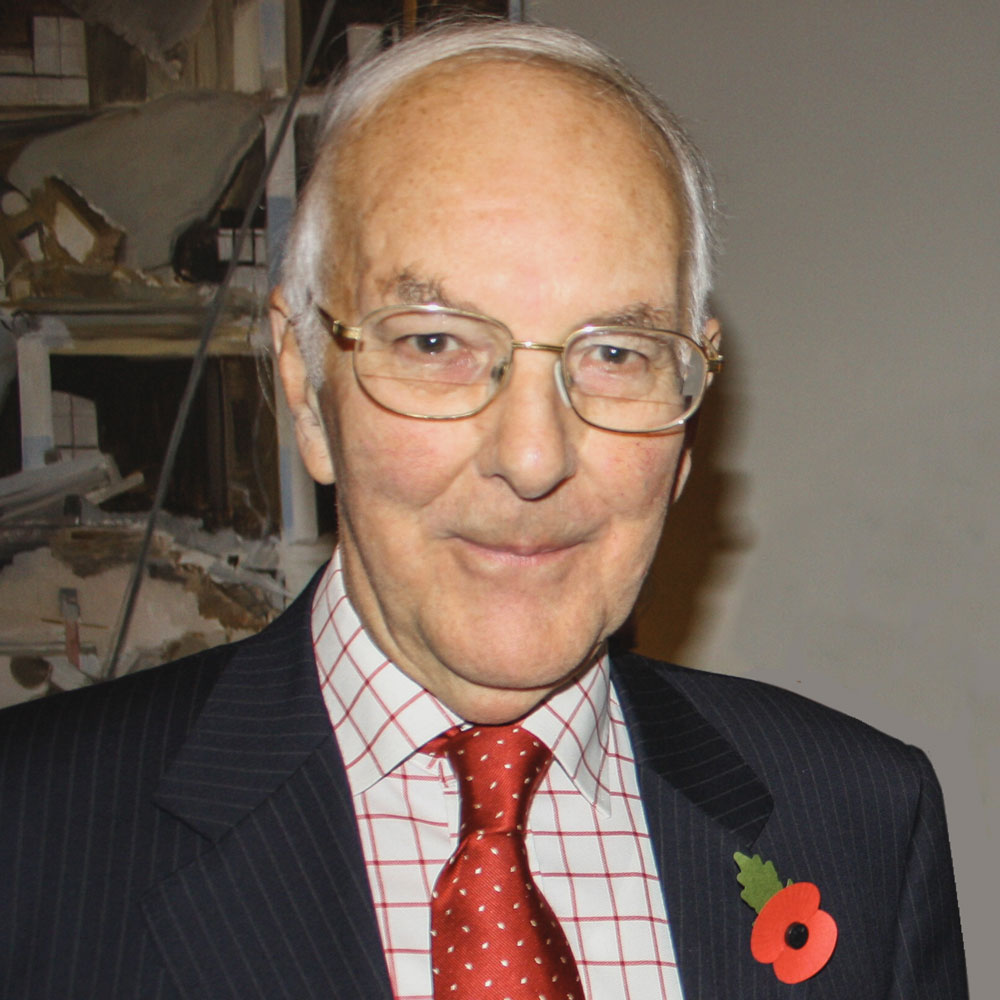
Scotland’s second most senior judge has been appointed as Chairman of Council of the Royal School of Church Music (RSCM). The Rt Hon Lord Gill (68), the Lord Justice Clerk, takes up the role in the summer. He succeeds Mark Williams, a senior partner in an international investment company, whose term of office is about to come to an end.

Brian Gill has had a lifelong interest in church music, ever since singing as a treble in the choir at St Aloysius' College, Glasgow. He has subsequently held several organist positions, most recently at St Columba’s Roman Catholic Church in Edinburgh, where he and his wife run an annual music festival. He is Chairman of the Friends of the Music of St Giles Cathedral, Edinburgh.

In addition to a lengthy and distinguished legal and academic career, Lord Gill was Chairman of the Royal Scottish Academy of Music from 1999 to 2006. During that time he oversaw a period of expansion including an increase in international recruitment and a widening of the curriculum. Since 2006 he has been Vice President of the RSAMD.

Sorabji

Sorabji Live

Further to the feature on Sorabji’s Organ music by Alastair Hinton in this issue, Kevin Bowyer is to give two complete performances of Sorabji's Organ Symphony No. 2, scheduled respectively in Glasgow on 6 June and Amsterdam on 20 June.

Another has been arranged to take place on 31 July in York Minster, although this will be of its (c.65 minute) first movement only.

Sir John Stainer Archive now in Durham

Sir John Stainer

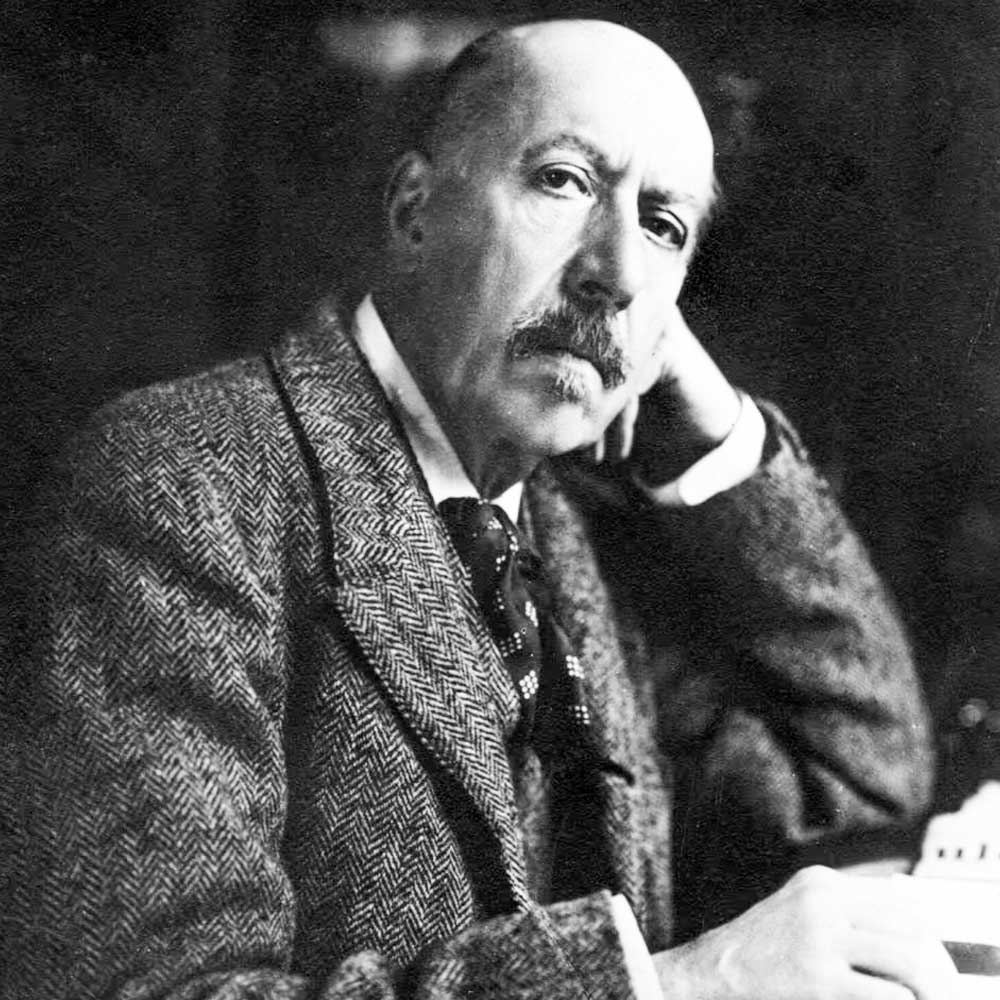
Sir John Stainer’s world-famous hymns, compositions and arrangements, together with historical documents, manuscripts, paintings, letters and photographs, have been donated to Durham University by his descendants. Stainer composed the Easter oratorio The Crucifixion, and the classic hymn Love Divine, commonly used in marriage services across the world. His musical arrangements of Christmas Carols also became the standard versions of God Rest Ye Merry Gentlemen, The First Nowell, Good King Wenceslas and I Saw Three Ships, amongst others.

Professor Jeremy Dibble, from Durham University’s Music Department, is the author of a book on Stainer - the 170th anniversary of his birth falls in June. Professor Dibble said: "This is an extremely precious archive and represents a major part of our national musical heritage.

"John Stainer radically reformed church music in England.  He helped transform church and cathedral choirs from being often dreary, dreadful and undisciplined, particularly at St Paul's Cathedral in London, and turned choral singing into a brilliant art form."

As an organist and conductor, Stainer reformed church choirs by introducing regular practices and improving the conditions of choristers. He tripled the size of the choir at St Paul’s Cathedral from 12 boys and 6 men to 36 boys and 18 men after he arrived there in 1872, and thousands of people flocked to hear the new standard of music. His influence in reforming an archaic system of choirs dominated by the ‘Vicars Choral’ was particularly important. The Vicars had well-paid jobs for life, but lacked discipline, commitment and authority, and, besides missing services (which were often attended by deputies), did not see why they were required to attend regular practices.

At St Paul’s, Stainer helped to restore the focus of London’s metropolitan cathedral and thousands of people flocked to hear performances conducted by him and his playing. He was regarded as one of the finest organists in the country and was hugely admired by his contemporaries. The donation by the Stainer family means that Durham now holds the definitive Stainer archive globally.

John Stainer’s grandson, John Ranald Stainer OBE, said:

"I am delighted that the material which my cousins Michael and John Newsom and I have looked after for all these years will now go to Durham University, which specialises in the music of my grandfather’s period and with which he himself had such close links."

The archive will be publicly available for scholars to study and a public exhibition is also planned. It is also hoped that some of the resources will be available for study online.

Southbank Centre receives Green Light for Funding Application to Heritage Lottery Fund for the Restoration of The Royal Festival Hall Organ

The Royal Festival Hall Organ

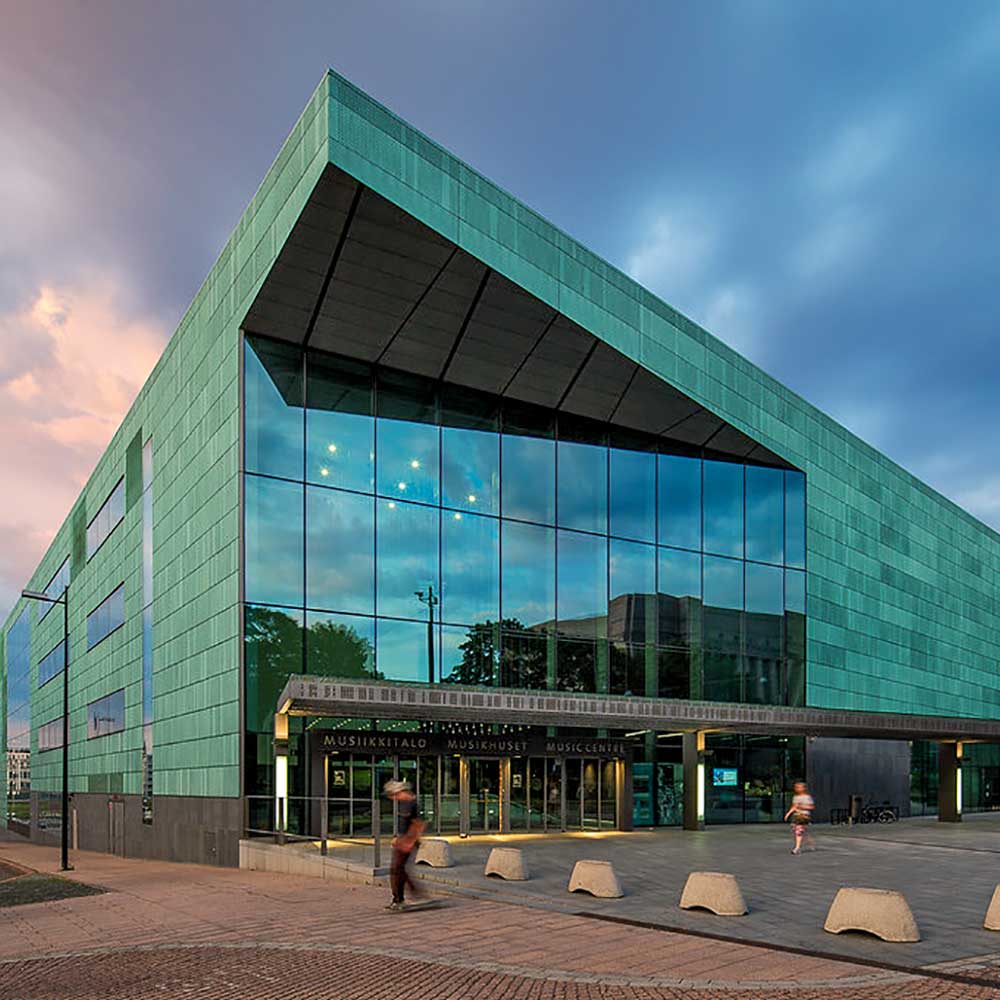
London’s Southbank Centre has been given the green light by the Heritage Lottery Fund (HLF) to work up plans for a grant of £950,000 to complete the refurbishment of the Royal Festival Hall’s organ. The first phase of the organ refurbishment, the restoration and reinstallation of the Swell, Great fluework and Pedal Principal 32ft stop, was completed as part of the major transformation of the Royal Festival Hall, which reopened in June 2007.

The final phase, at a cost of over £2 million, will be completed in 2013. The second round application to HLF was submitted by Southbank Centre in March, and the outcome is likely to be announced in June. A major fundraising campaign will be launched in September to complete the funding required for the work.

The restoration work is being carried out by Harrison and Harrison Ltd, the company that originally built and installed the organ in 1954, and was responsible for the first phase of the refurbishment.

Alan Bishop, Chief Executive of Southbank Centre, said: "We are committed to fully restoring the great organ of the Royal Festival Hall for the next generation. I am delighted that the Heritage Lottery Fund has given us this important encouragement at such a vital time in our plans."

Sue Bowers, Head of the Heritage Lottery Fund for the London region said: "We look forward to working further with the Southbank Centre to develop their plans for a full award to restore this magnificent organ, so that this centre-piece of the Royal Festival Hall may be enjoyed by future generations."

Fingers crossed!

Carol Williams

Carol Williams

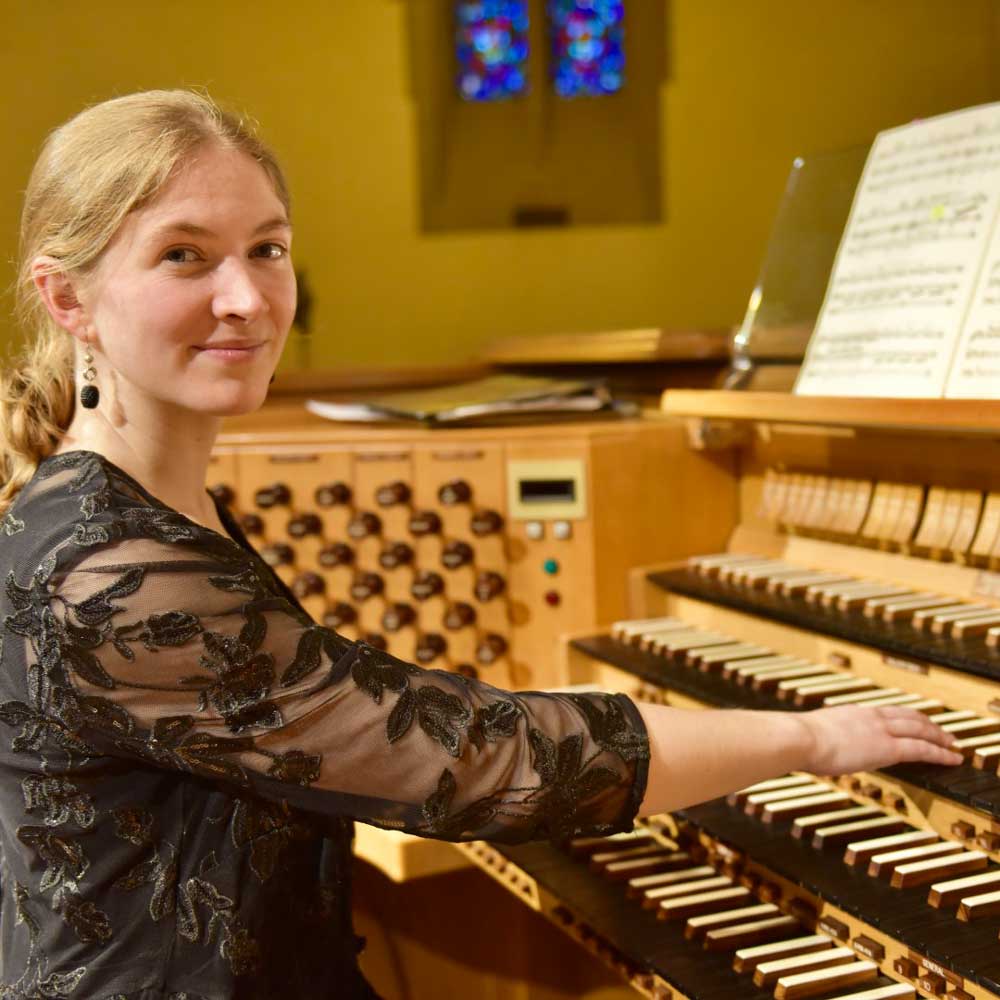
Dr. Carol Williams, Civic Organist of San Diego, has just returned from the UK performing six concerts. Concert venues included the Salomons Country Estate in Tunbridge Wells in Kent, with a performance on the historical Welte organ – this unique organ which dates back to 1914 was  filmed for the TourBus DVD series.

The Welte organ is unusual in that it can take both Philharmonic and the earlier Orchestrion type rolls. Leading performers of the day who cut rolls, such as Edwin Lemare, can be heard on the Welte organ. Then a concert on the Compton organ with its two consoles (one classical and one theatre console) in the Guildhall in Southampton.

Finally a concert at Gloucester Cathedral with its delightful acoustics and stunning stenciled organ case. At this concert, Williams performed Carillon-Fanfare by Robert  Jones , a work the composer dedicated to Dr. Williams. (Photo included of Carol and Robert Jones who was present at the concert).

For full information about Carol Williams, please visit her website at www.melcot.com.